The balloon pilot
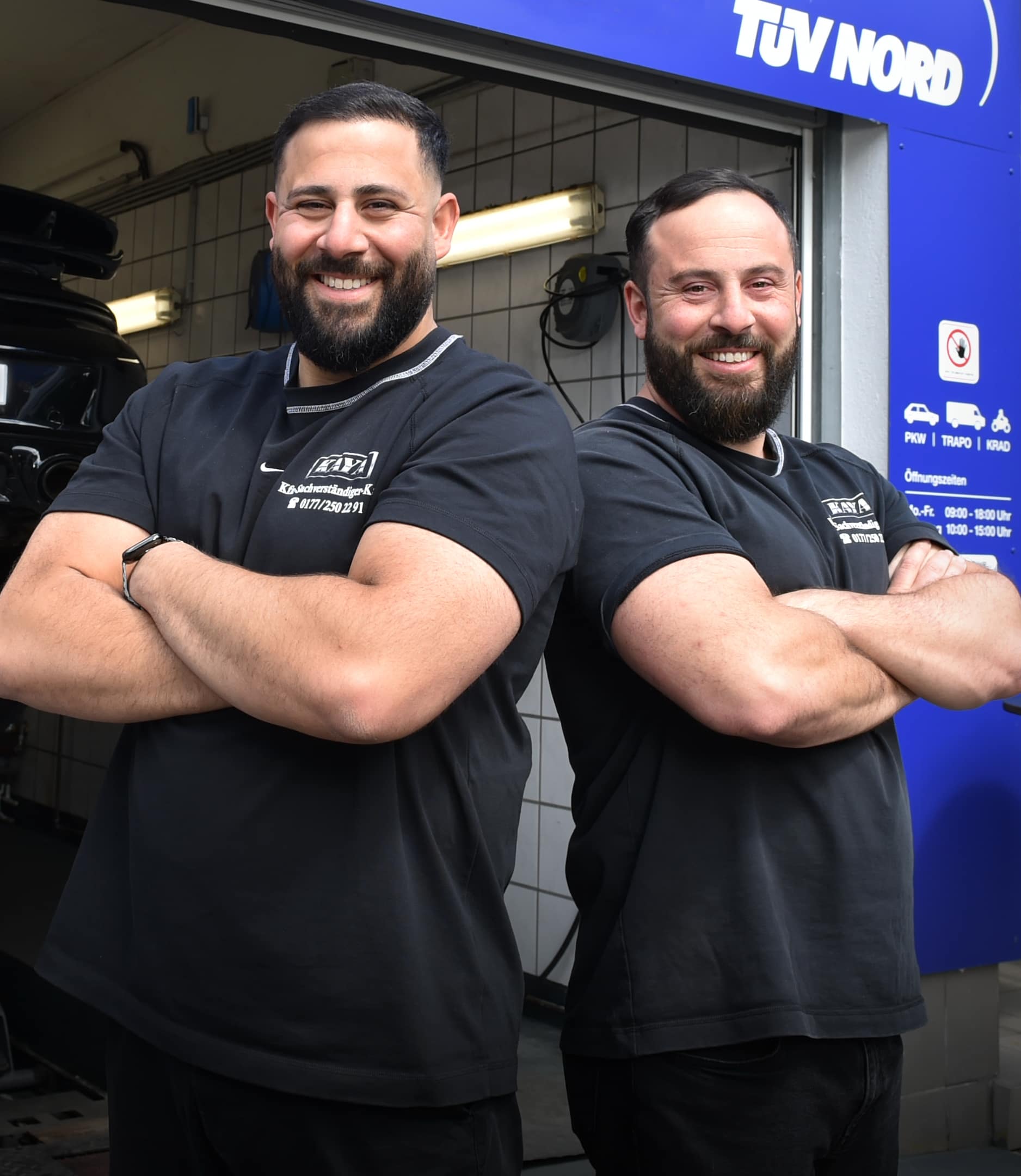
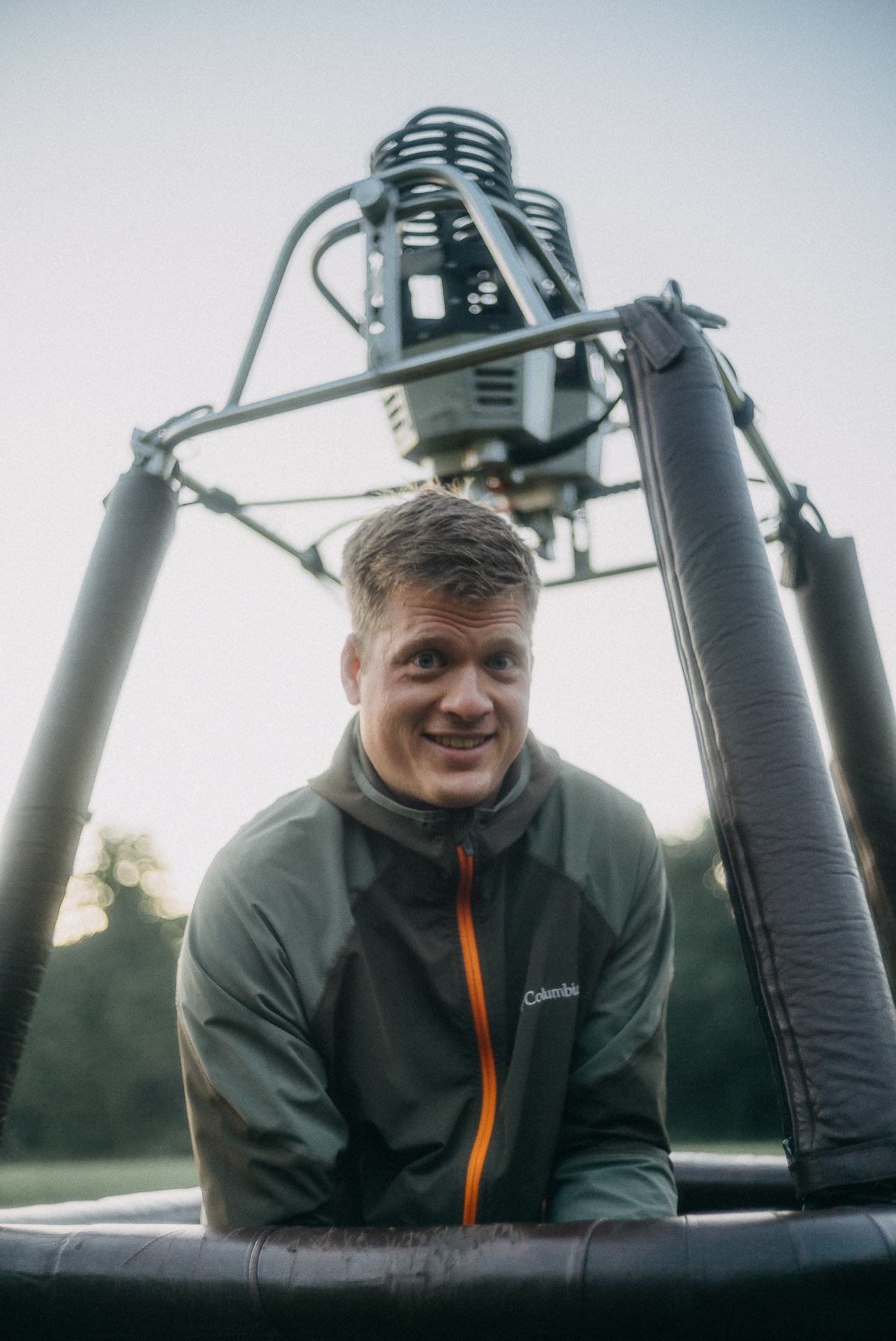
Dominik Bartsch first went hot-air ballooning with his father at the tender age of three. The expert in pipelines and plant construction has held his own pilot’s licence for eleven years.
“Even as a little boy, I would sit on the gas cylinder in the basket when my father was piloting the balloon. I always knew that I would do the same one day,” says Dominik Bartsch. If you ask the 36-year-old for the most unusual thing he has experienced while ballooning, the first episode he mentions is not an Alpine crossing or his participation in the world championships. “The most unusual thing that ever happened to me was landing with my dad in the middle of the Charles Bridge in Prague. We threw a 50-metre rope down to the passers-by and shouted down at them what to do.” He was twelve years old at the time. If he hadn’t known before, he certainly knew at that point that ballooning was going to be a great adventure; after all, you never know exactly where you’re going to land when you set out.
Even as a little boy, I would sit on the gas cylinder in the basket when my father was piloting the balloon. I always knew that I would do the same one day.

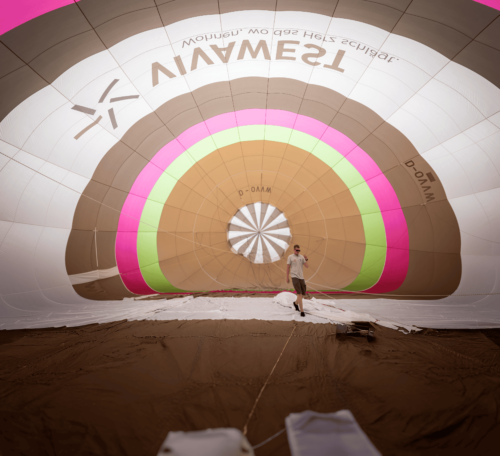
In the meantime, he has long since obtained his own pilot’s licence, completing well over 700 trips and returning safely to terra firma every time. “You can influence your altitude and then use that altitude to make a few degrees of directional difference,” explains Dominik Bartsch. But ballooning is not a matter of luck. “No matter where I take off, I have to be sure that I can reach a safe landing area.” That’s why meticulous preparation for any trip is so important. In pilot training, you learn to assess the inertia of the system; you also learn what it’s like to descend quickly from 4,000 metres or to assess human performance when the oxygen runs low. And, what’s more, a balloon has to be tested for airworthiness each year.
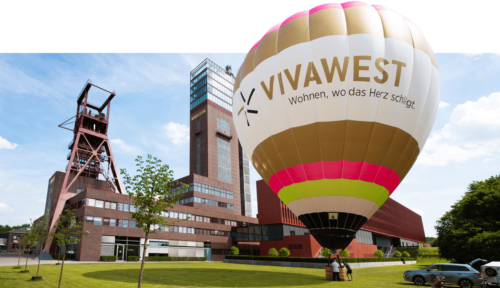
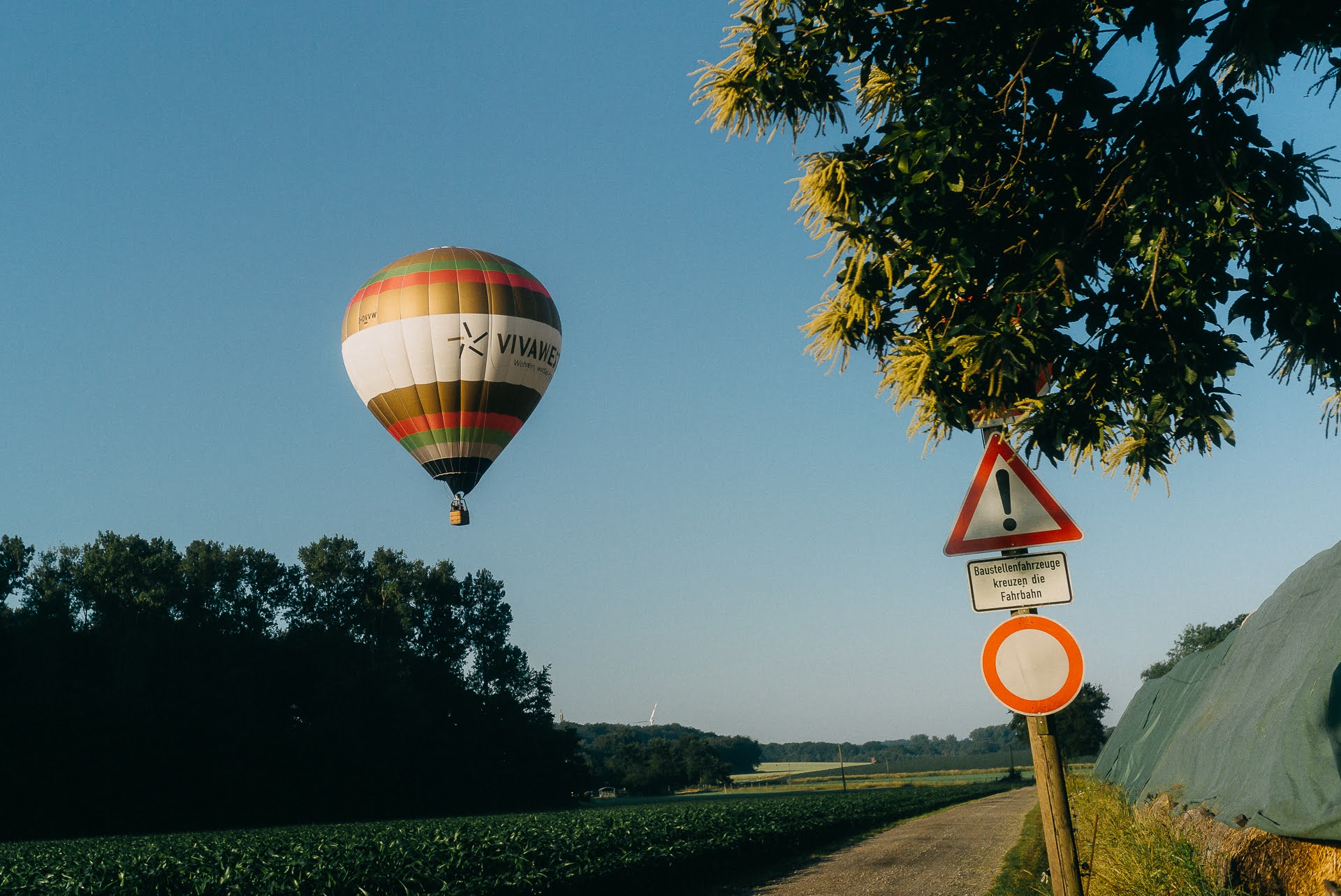
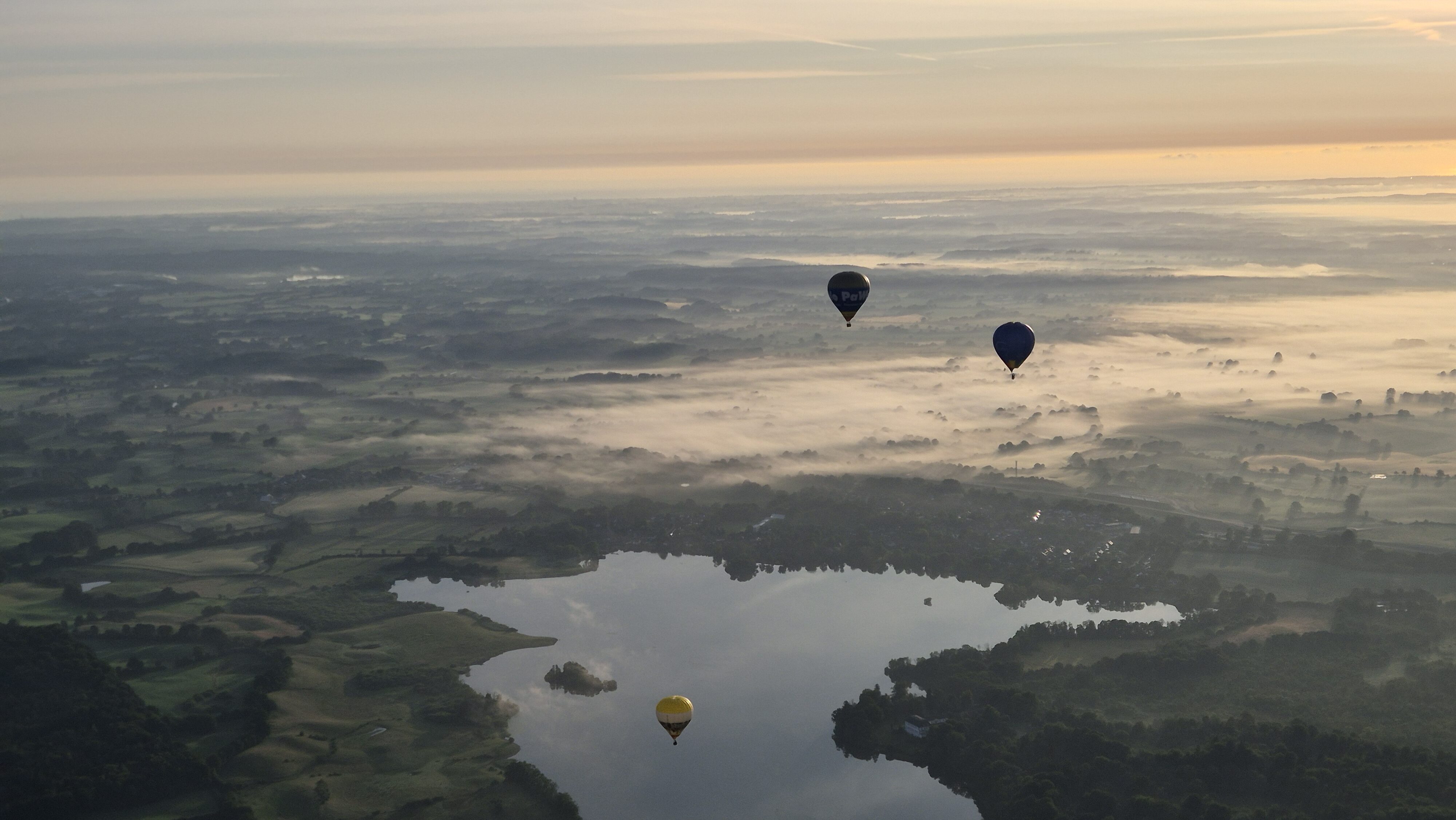
Whenever the weather permits, the balloon pilot flies hot air balloons, mainly in the Ruhr area and Münsterland. He is allowed to take passengers, which some of his colleagues have already benefited from.
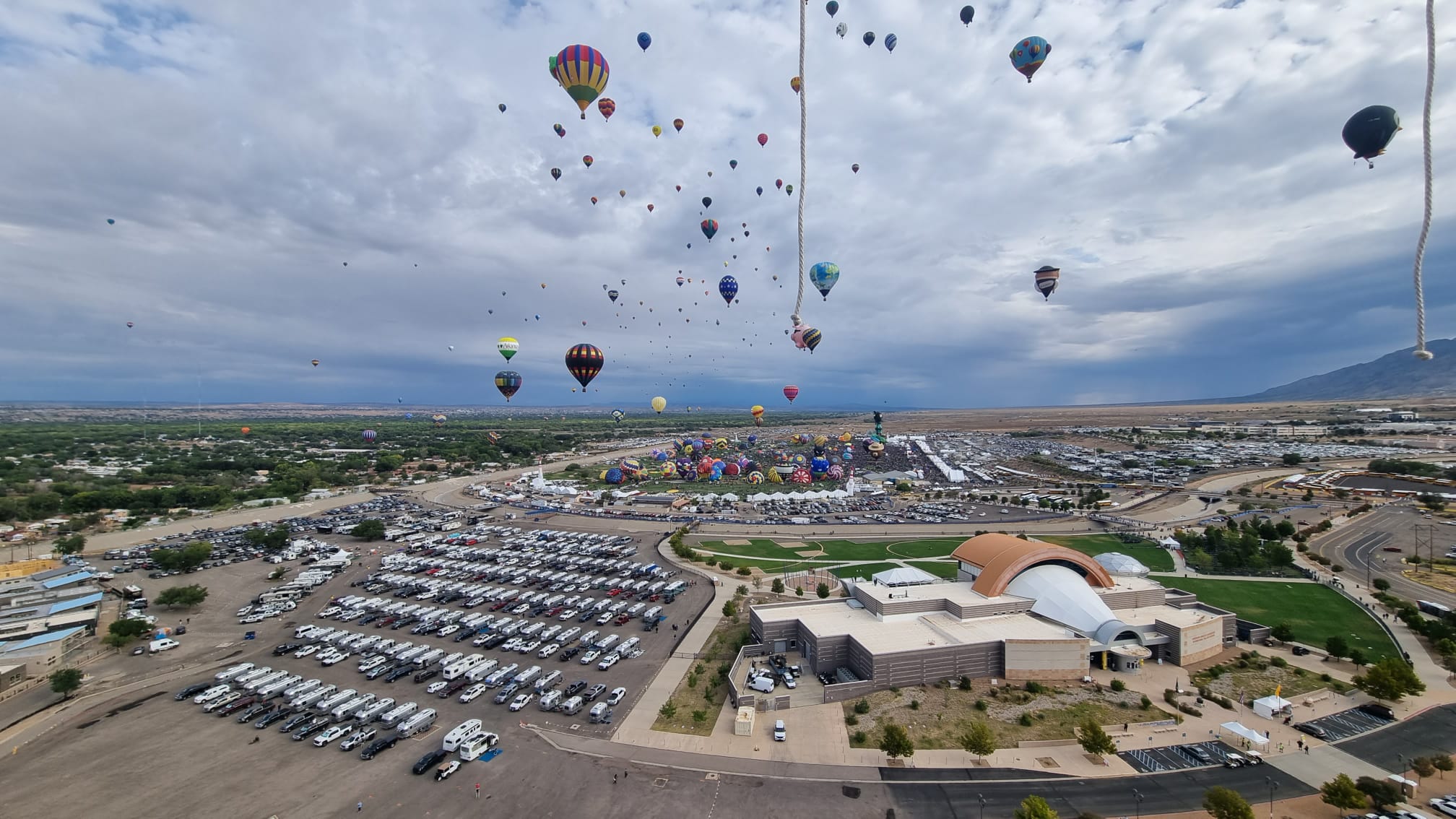
“Balloon flights only take place in the morning and evening, as there are no thermals at those times, thermals being updrafts and downdrafts due to solar radiation,” explains the engineer. Germany’s Aviation Act allows balloonists to land anywhere, usually on dirt roads and in fields. Not all farmers like it. “Some farmers will approach the balloon with a crate of beer, others in a slurry tanker,” says Dominik Bartsch with a smile. As a rule, however, all that is needed is a few words of explanation. In France, someone once brought us fresh cheese and a good red wine. “In my balloon I’ve been able to discover a lot of beautiful regions in Europe as well as in the US and Saudi Arabia,” he continues. In Albuquerque, New Mexico, he once took to the sky with 800 other balloonists. “It was a crazy spectacle, with burners hissing everywhere and the balloons sometimes bumping up against each other in the air.”
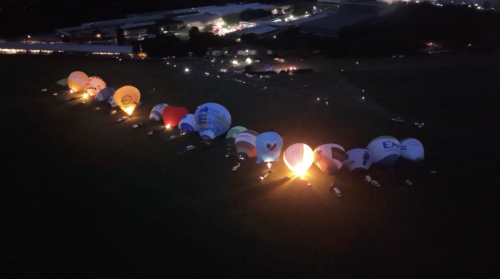
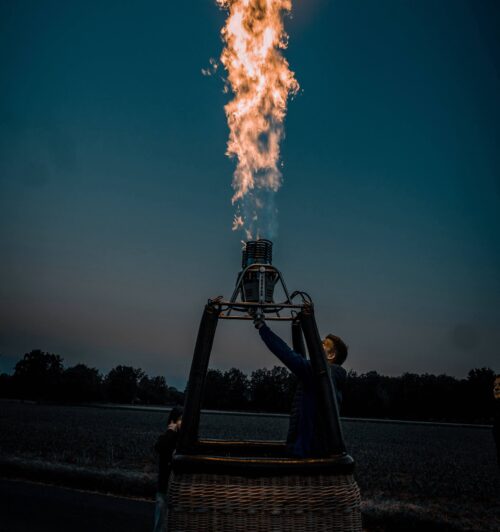
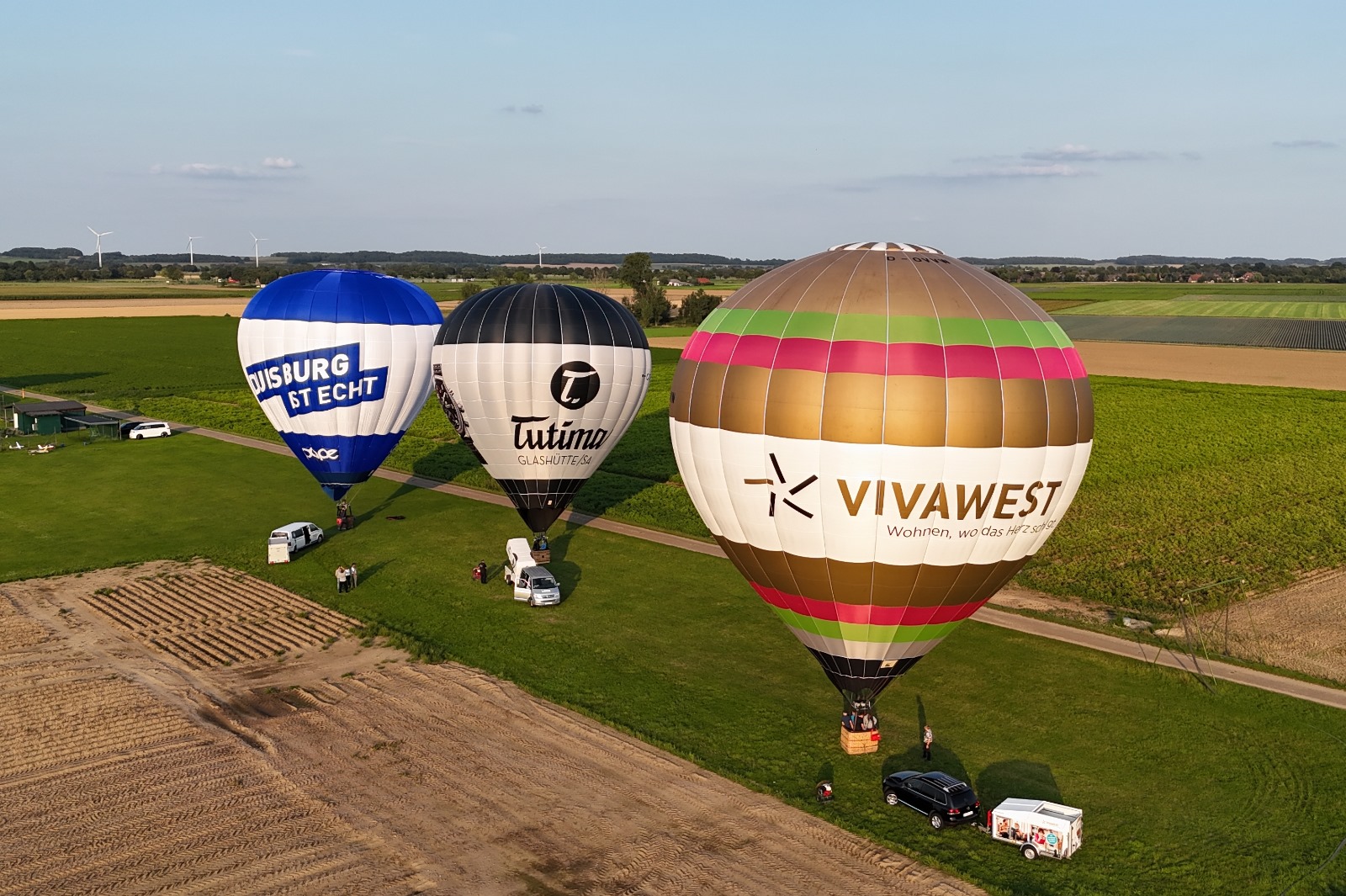
Balloon glow at Wesel’s Römerwardt airfield during the Wesel PPP city festival.
His highlights include Alpine crossings, which are only possible in winter and have to be meticulously planned. “It’s only two to three days beforehand that we get to see whether the weather is going to be right.” The launch takes place very early in the morning, in places like the picturesque Tannheimer Tal in Austria. With the appropriate technology and thick clothing, you can cross the Alps at around 120 km/h and an altitude of 3,500 to 4,000 metres and in temperatures of up to minus 30 degrees. “You don’t notice how fast you’re going because you move with the wind.”
Ballooning is an expensive hobby. Just the hand-sewn shell of a hot air balloon, which will be between 1,000 and 2,000 square metres in size, will cost up to 60,000 euros. That’s why he is happy to have a sponsor. During a one-hour trip, the two burners on board consume around 100 to 150 litres of propane gas. “I make sure that I use carbon-neutral propane,” says the engineer. The nature lover even likes to take to the skies without hot air – in a gas balloon. Gas balloons run on hydrogen and don’t require a burner at all, and you jettison ballast to gain altitude. “Piloting a gas balloon is completely silent,” Dominik Bartsch says. He volunteers on the board of Essen’s gas balloon club, which operates the competitive sports centre for gas balloons in Gladbeck.

-
-
Vereinsfahrt 2024 in Essen.
-
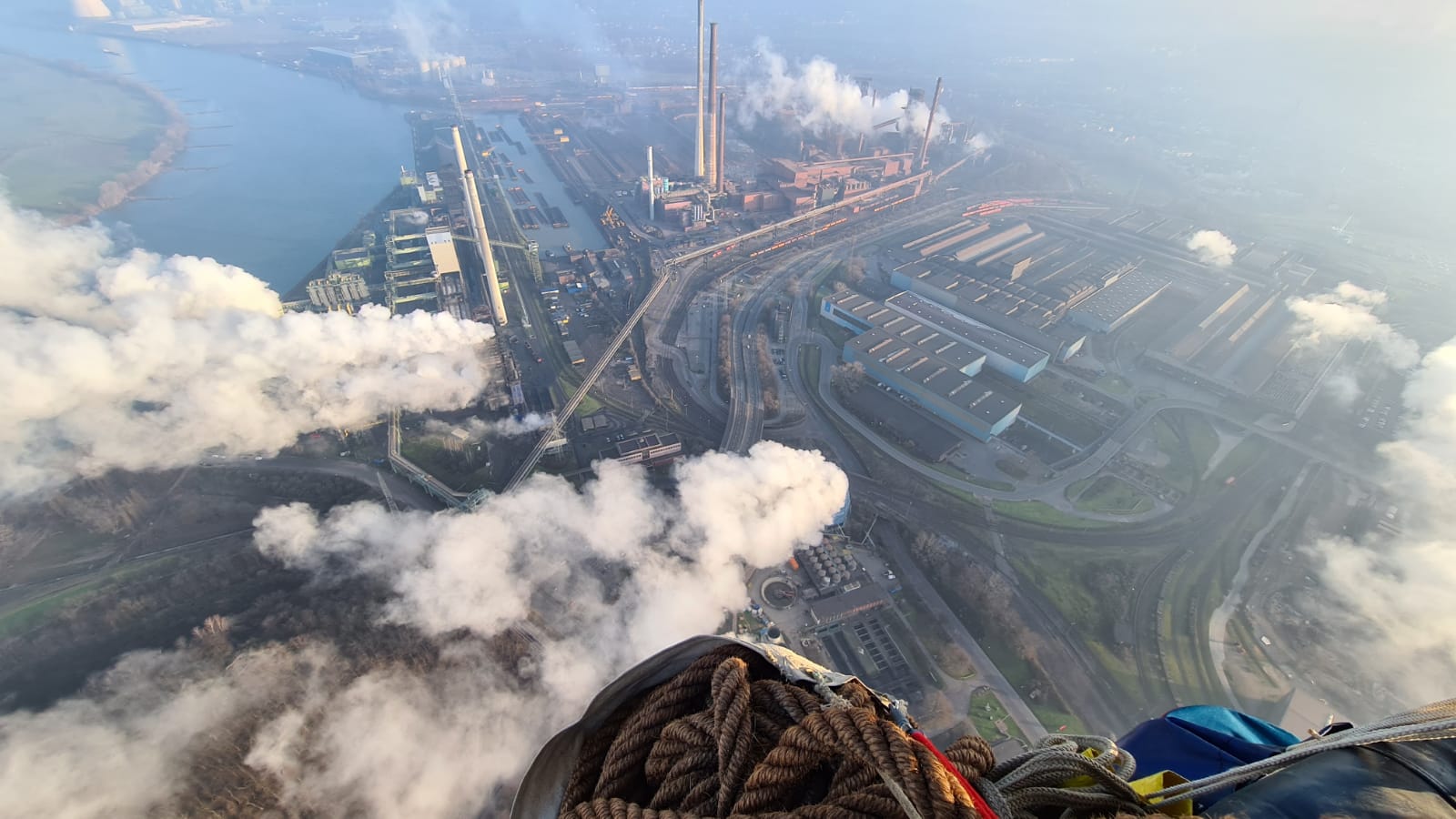
Über dem Kraftwerk in Duisburg.
-
-
International Balloon Festival in Albuquerque, New Mexico, 2017.
-
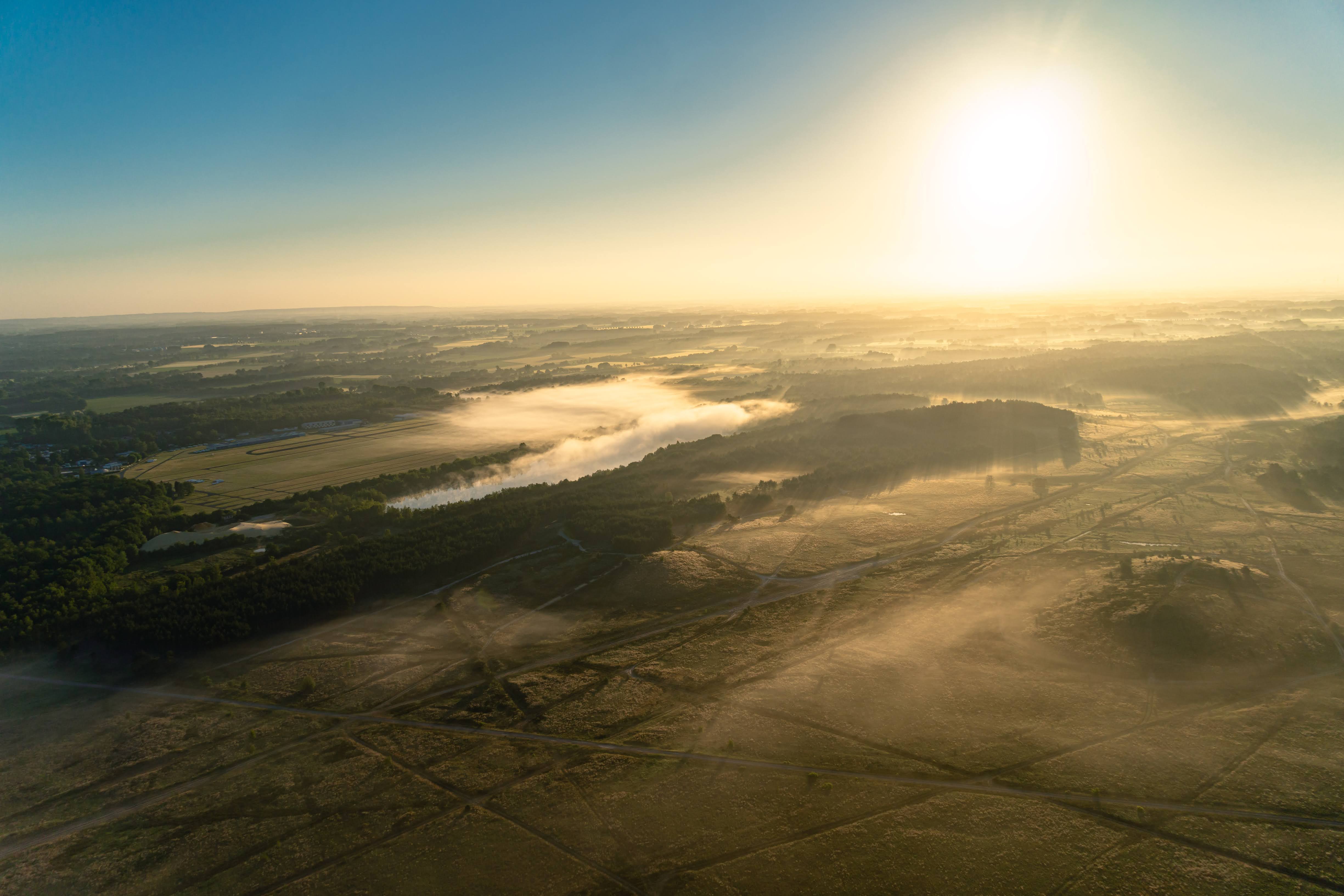
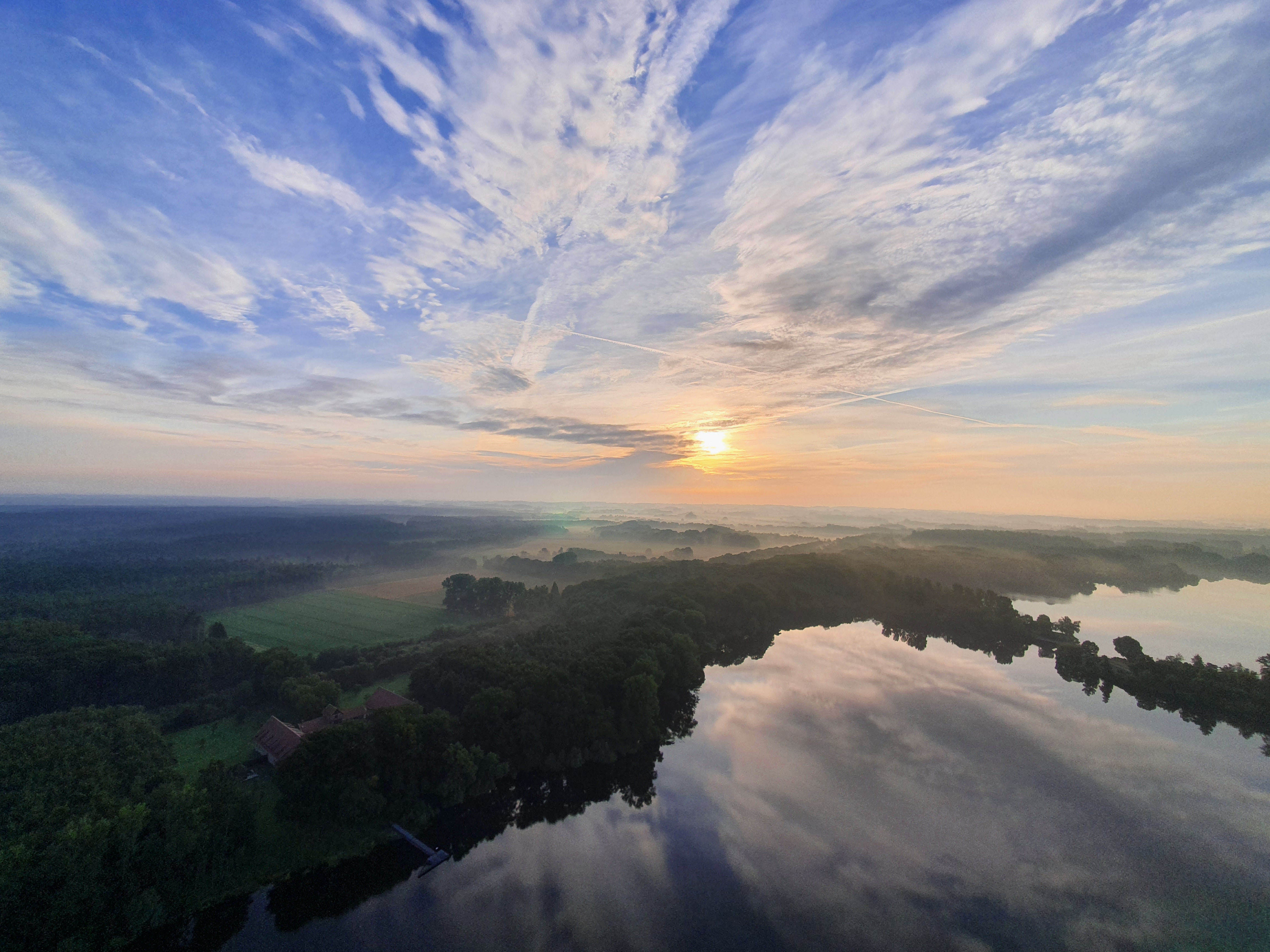
Hullern Reservoir.
-
-
-
Near Kiel.
The club obtains its hydrogen from a pipeline running from Gelsenkirchen to Marl, which Dominik Bartsch looks after in his role as a pipeline expert at TÜV NORD. “The pipeline connection allows us to pursue our hobby; it’d be much more expensive if the hydrogen had to be delivered by tanker.” Sometimes Dominik Bartsch will glide silently in his gas balloon over the Marl Chemical Park and then on over a large tract of forest, where he may hear wild boars grunting on the ground or the roaring of deer in the night. He also experiences the draw of competition: he and some club members recently took part in the Gas Balloon World Championships – the Gordon Bennett Race – in France. All three German teams finished in the top ten.
The pipeline connection allows us to pursue our hobby; it’d be much more expensive if the hydrogen had to be delivered by tanker.
In an ideal world, Dominik Bartsch’s next feat in a hot air balloon would be to cross the English Channel to England. His biggest dream, however, is to pass on his passion for air sports to his two daughters (4 and 1), just as his father taught him to enjoy it. The younger of the two is already to be found crawling over the fabric panels of the balloon shell on the ground while her dad readies it for take-off. And who knows whether he and his daughters might not soon be seen in a hot air balloon over the TÜV NORD campus in Essen.