Our culture
is our guiding principle
A four-level model that works: How TÜV India communicates to ensure all staff are on board with the shared vision.
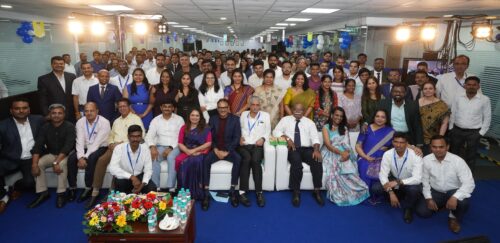
At TÜV India, communication means more than just the exchange of information. It is the invisible network that connects more than 3,000 employees across India. “In an organisation of our size and diversity, the quality of our communication shapes our culture and, consequently, our results,” says Managing Director Manish Bhuptani. TÜV India’s core values – independence, impartiality and integrity – are not primarily conveyed through policy memos or digital platforms, but through the day-to-day behaviour and conversations of our employees. “Tools transmit data, but culture creates understanding. Those who have internalised our values do not need instructions to act correctly,” explains Bhuptani. “Our culture is our compass.”
TÜV India employs a four-tier communication system. At executive level, board meetings, management conferences and the annual strategy and technology summit ensure that strategic objectives are aligned. “Managers – from the managing director down to team leaders – are our most important ambassadors,” explains Bhuptani. A manager who explains decisions, provides context and checks in regularly with their team contributes more to the organisation’s direction than any platform or circular. Managers visit sites, meet staff at all levels and maintain close contact with customers. An unwritten rule at TÜV India is: every interaction shapes our reputation. Day-to-day operations are kept on track through monthly and quarterly meetings, QHSE reviews, project status updates and cross-functional working groups.
TÜV India employs a four-tier communication system. At executive level, board meetings, management conferences and the annual strategy and technology summit ensure that strategic objectives are aligned. “Managers – from the managing director down to team leaders – are our most important ambassadors,” explains Bhuptani. A manager who explains decisions, provides context and checks in regularly with their team contributes more to the organisation’s direction than any platform or circular. Managers visit sites, meet staff at all levels and maintain close contact with customers. An unwritten rule at TÜV India is: every interaction shapes our reputation. Day-to-day operations are kept on track through monthly and quarterly meetings, QHSE reviews, project status updates and cross-functional working groups.
Tools transfer data, but culture fosters understanding. Those who internalise our values do not need instructions to act correctly.
We believe in proactive internal communication, even in uncertain times. Honest, timely communication builds more trust than perfectly worded but belated messages.
Equally important is the personal level: “Joint celebrations, recognition schemes, team-building activities and one-to-one discussions with managers strengthen the sense of belonging,” says Bhuptani. Communication is not a one-way street. It thrives on listening. “Some of the most valuable ideas often come from the grassroots,” emphasises Bhuptani. TÜV India has therefore established channels for feedback, ideas and dialogue: ‘Employee of Excellence’ forums, regional meetings, employee engagement surveys, the performance management process, and an open-door policy for divisional heads and senior management. Timeliness is crucial for successful communication: employees who learn important news about their own company from external sources feel sidelined. “We focus on proactive internal communication, even in uncertain times. Honest, timely communication builds more trust than perfectly worded but belated messages,” says Bhuptani.
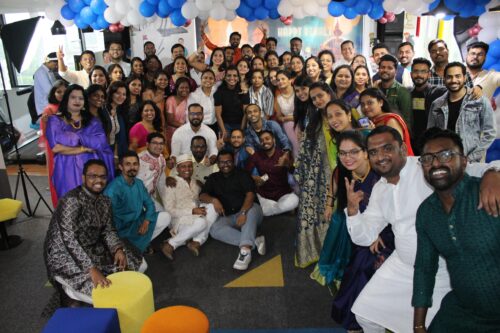

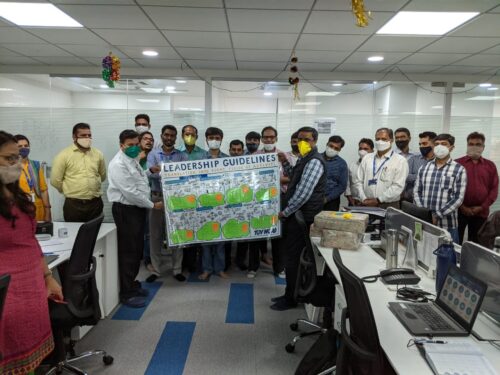
The culture of communication really comes into its own in times of crisis. During the COVID-19 pandemic, between March and June 2020, senior management held around 112 online meetings that reached all levels of the organisation. The result was that TÜV India weathered the crisis and emerged stronger than ever. This culture of communication also shines through in joint projects. Take, for example, the development of the 2020 leadership guidelines. In 43 workshops held at more than 25 locations, 1,700 employees contributed their ideas. The result was a catalogue of guidelines that reflects the entire organisation – a true testament to participatory communication.
The fact that TÜV India’s communication culture is a success is confirmed by the Group-wide employee survey: with 78 per cent employee engagement, TÜV India ranks among the frontrunners. “This is more than just a figure,” says Bhuptani. “It shows that communication is not just a project for us, but a cultural value.” For him, good communication requires determination, commitment and a willingness to listen. “Every employee, wherever they are, deserves to feel informed, involved and connected to a greater purpose.”