Power Platform for Digital Transformation
With the Digital Hub SEA, TÜV NORD GROUP is laying the foundation for a new digital way of working in Indonesia.
Southeast Asia serves as a pilot region for a cloud-first platform designed to connect all international units of the TÜV NORD GROUP. The goal is to standardize processes globally, make better use of data, and relieve employees through the use of artificial intelligence (AI). The platform also opens up new business areas: data-driven services, digital inspection models, AI-powered analytics.
“The Digital Hub SEA makes us faster, more efficient, and safer,” says Ringo Schmelzer, Chief Operating Officer (COO) of the TÜV NORD GROUP. Artificial intelligence is driving innovation forward, but the “Human in the Loop” principle remains central: people stay at the heart of things. “AI should support, but not decide independently. People continue to evaluate recommendations and results,” Schmelzer emphasizes. “We are developing the platform in an agile and regulatory-appropriate environment, optimizing it, and only then rolling it out globally.”
Indonesia was deliberately chosen as the pilot region: Southeast Asia is one of the most dynamic economic regions in the world, with over 680 million people, a digital economy that has reached a gross merchandise value of more than 300 billion US dollars, and growth rates of around 4.5%. High pace of change, digital openness, and a rapidly growing market make the region an ideal testing ground. “What works there can later serve as a reliable blueprint for other countries and societies,” Schmelzer is convinced. “The goal is a cloud-first platform as the foundation for sustainable success and the future of our business.” Within three years, the Power Platform is to be established as the global standard across the TÜV NORD GROUP.
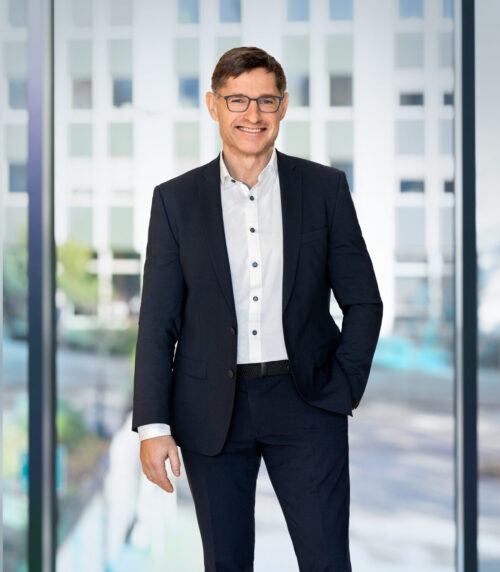
What works there can later serve as a reliable blueprint for other countries and societies.
For employees, the benefit becomes visible first where a lot of time is currently spent on routine tasks. “We increase personal productivity by having AI take over routine activities and creating space for new tasks,” explains Schmelzer. One example is Microsoft Copilot. The AI application summarizes long email threads, creates initial drafts, or analyzes data. Copilot can also create multilingual notes during a Teams meeting and summarize the most important decisions, so that all participants are on the same page.
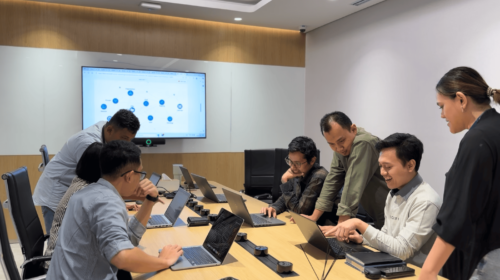
The development team in Indonesia tests and optimizes the Power Platform.
But the Digital Hub SEA supports far more than just personal productivity: with tools like Power Apps, Copilot Studio, and Foundry IQ, complex business processes are to be automated. Data from multiple sources is consolidated and intelligently processed to be used for analyses, AI models, and automation. This creates an intelligent platform that translates information into knowledge, forecasts, and concrete recommendations.
Transparency, control, and security are central prerequisites for building trust in AI-driven processes.
The Digital Hub SEA is not an isolated IT project. “Our Digital Hub is a learning space for the entire TÜV NORD GROUP,” says Schmelzer. Solutions that are successfully tested in Southeast Asia are intended to be used internationally at a later stage. At the same time, good ideas from other regions can feed into the platform. More complex topics such as AI integration into deep process flows will follow step by step. TÜV HELLAS, TÜV NORD Nederland, and TÜV India are already important drivers for the integration of Azure, Microsoft’s cloud platform. In this way, a global, modularly expandable architecture is being created that shares innovations across the group and avoids duplication of effort.
For managers and project leads, this also creates tangible added value. When data from finance, operations, or project management is better connected, developments can be identified earlier. AI can make patterns visible, flag anomalies, or prepare recommendations. “Decisions are not automatically made by this, but they can be better prepared,” explains Schmelzer.
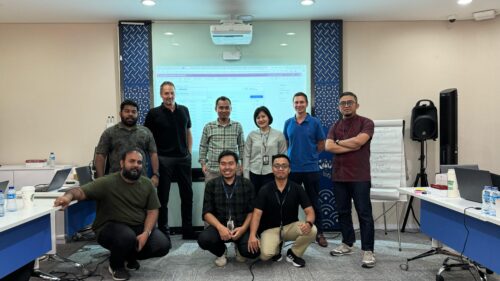
The Indonesian development team works together on the forward-looking digitalization project.
The changes affect us all. Only as a global team can we successfully shape the future of our company.
For the new digital way of working to function worldwide, the TÜV NORD GROUP relies on a hybrid IT architecture that intelligently connects cloud solutions and local infrastructure. Computing power, scalability, and AI functions are placed where they can be provided most effectively: in the cloud. There, performance, security, and availability can be mapped at an international level. At the same time, modern requirements for digital sovereignty are taken into account. Sensitive data and critical applications are specifically protected and processed in a way that reliably meets legal requirements, regulatory standards, and security considerations. “Transparency, control, and security are central prerequisites for building trust in AI-driven processes,” Schmelzer emphasizes. “The changes affect us all. Only as a global team can we successfully shape the future of our company.”